
An article written by Arianna Napolitano
When looking at Spain from Google’s satellite images, the provinces of Almería and Huelva, two agricultural centres in the southern region of Andalucía, appear covered with vast white patches. This is what is known as El Mar de Plástico, or La Huerta de Europa. Beneath these plastic-covered greenhouses is the heart of Spain’s intensive agricultural industry, consisting of more than 30,000 hectares and supplying Europe’s biggest supermarkets with cheap products year round
This model of intensive agriculture has brought rapid economic growth to the provinces, but it has also created deep social fractures. The increasing demand for low-cost labor has led to the arrival of thousands of migrant workers, many of whom live in extreme poverty and uncertainty. Due to the instability and seasonality of agricultural contracts, these jobs are largely avoided by the local population, making them the first point of entry into the Spanish labor market for newly arrived migrants.
However, the region’s infrastructure and public policies have failed to keep pace with the demographic rise. The lack of affordable housing and state-supported accommodation has forced many workers to build and inhabit irregular settlements around the fields.Among those most at risk are menores extranjeros no acompañados (MENAs), defined as minors of less than 18 years of age who migrated without a parent or a legal guardian. These young people find themselves completely unprotected in informal settlements, and trapped in a cycle of social exclusion.
The Rise of Intensive Agriculture and Human Insecurity
Today, an estimated 59% of Andalucia’s migrant population works in agriculture, a number which is likely to be higher when accounting for the irregular migrant workers. Public infrastructure and social protection systems have failed to adapt to the rapidly increasing population in the region, leading to big issues in the provision of social protection, education, and, most importantly, suitable housing.
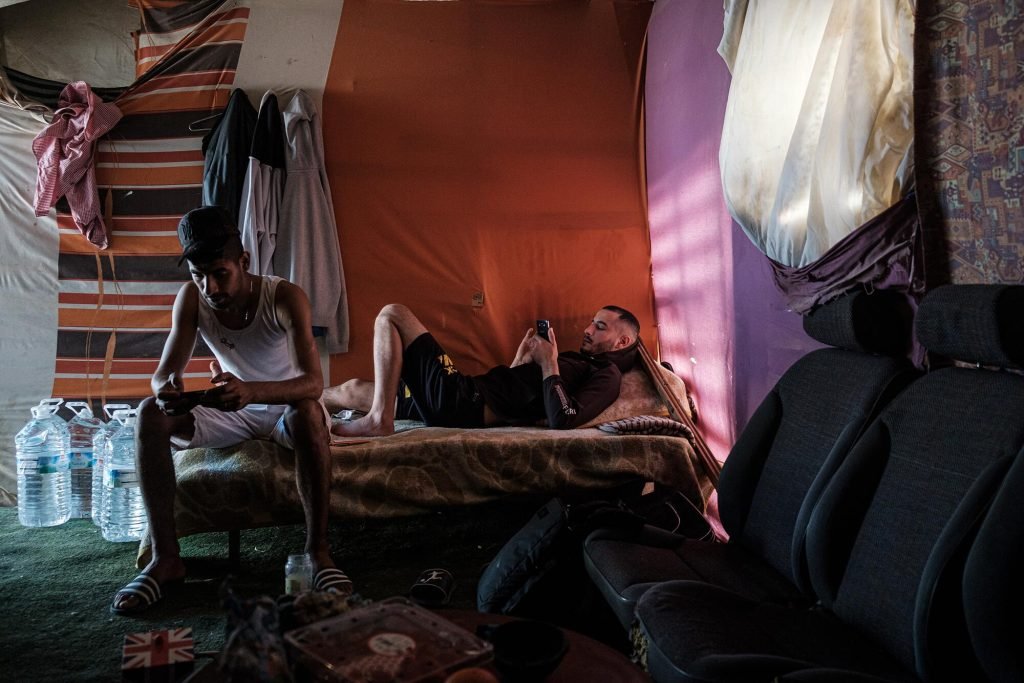
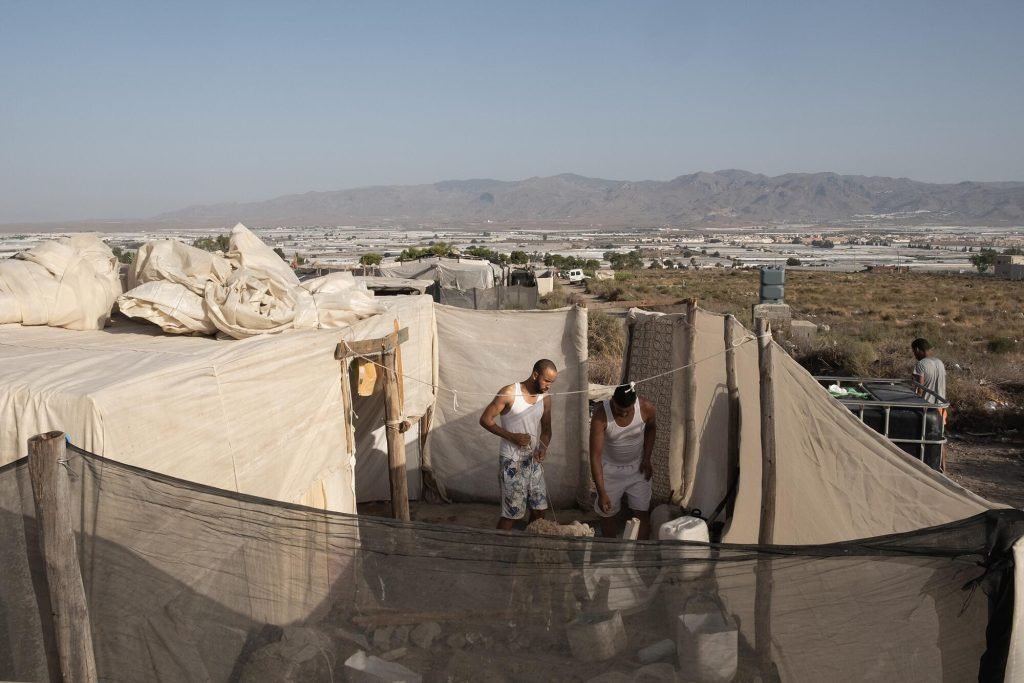
Housing is still one of the most pressing issues in the region. Despite the agricultural sector’s growth, authorities have not provided adequate residential solutions for the workforce. Thousands live in ‘asentamientos’, informal settlements built from scrap material near the greenhouses.
These dwellings, which started as a temporary solution, soon became the workers’ only possible housing option. Here, the absence of basic resources such as food, clothing, hygiene products, is part of daily life. Moreover, the settlements often lack access to clean water, electricity, sewage systems, or waste disposal.
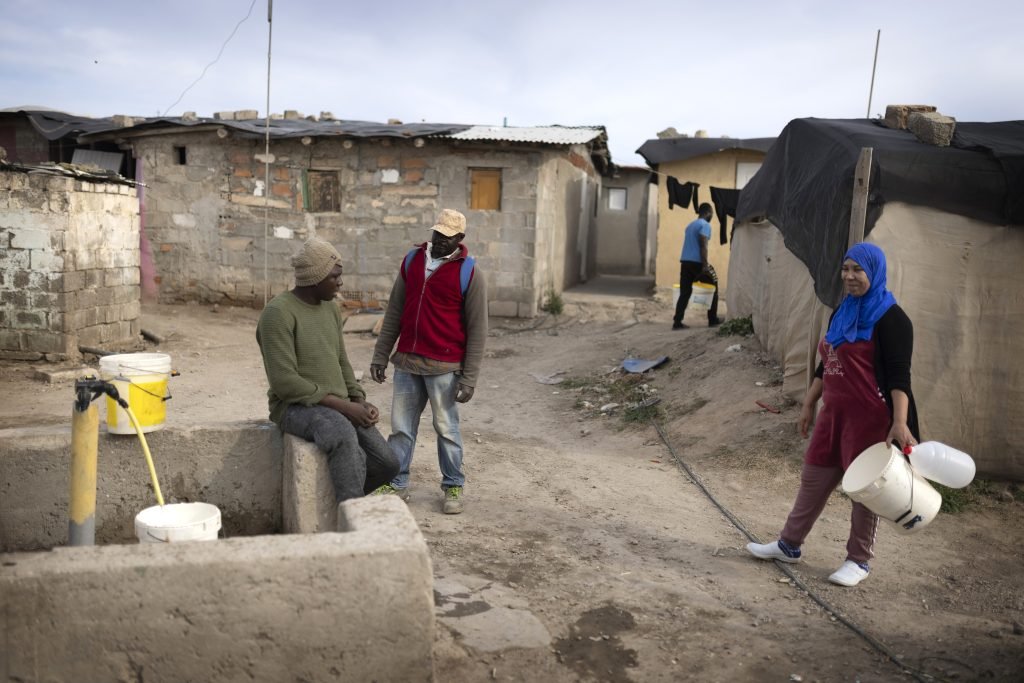
A report from Publico highlights that 74% of inhabitants in Huelva’s settlements face significant difficulties accessing potable water. Furthermore, 84.7% of residents in Huelva’s settlements report substantial challenges in accessing electricity, often relying on unsafe connections to nearby power sources.
The need to rely on unstable electrical connections means that inhabitants of the settlements live under constant risk of fires. In January 2023 one of the biggest settlements in Almería named El Walili, witnessed a fire leading to the evacuation of 500 migrant workers. This incident left the residents homeless during winter, without any relocation plans in place. This is only one of the many episodes that make these irregular settlements an extremely unsafe place to live in.
The general instability and unsafety lead the residents to face continuous tension, social isolation and discrimination from surrounding communities. Within these communities, minors are the group with the highest level of vulnerability.
Living in the Shadows
Andalucía is the region hosting the highest number of unaccompanied foreign minors (MENAs) in Spain, with 38.5% of those arriving in the country being admitted here. However, the reality behind these figures often remains obscured. Many of these minors disappear from official statistics after disappearing from reception centres or when living in slums. Unaccompanied minors living in the settlements find themselves navigating extreme precarity.
Unaccompanied minors living in the settlements find themselves navigating extreme precarity. In these conditions, even the most basic bureaucratic requirement, such as registering an address (empadronamiento), becomes an overwhelming obstacle. According to Publico, 90% of the inhabitants of informal settlements cannot have access to empadronamiento, which is necessary to access healthcare, social services, schooling, and even to begin job training.
To survive, many are forced to rely on informal networks or pay intermediaries and mafias to obtain fraudulent registrations. These practices not only drain already scarce resources but expose young people to further exploitation and criminalization. Without official recognition, they cannot access state programs meant to support their transition into adulthood. For unaccompanied minors turning 18, the risk is even greater: they age out of protection services and immediately face the threat of homelessness and dependency on exploitative labor conditions.
In these conditions, employment, when it exists, is informal and based entirely on the goodwill of employers. Irregular contracts, wage theft, and physical exploitation are extremely common. Moreover, young people without documentation or networks are unable to report abuse or claim their rights, reinforcing a cycle of exclusion.
The result is not just material deprivation but deep social exclusion. These minors and young adults live outside of institutional protection and outside of society. Their vulnerability is structural, worsened by the absence of safe housing and social integration mechanisms.
A Systemic Neglect: The Urgent Need for Comprehensive Support
The situation of unaccompanied minors living in the slums of Huelva and Almería reveals a wider structural issue. While some NGOs attempt to provide support, their capacity is limited and inconsistent. The institutional response is fragmented and underfunded, failing to meet the scale of the crisis. Regional governments often lack the political will or the budgetary means to implement sustainable programs, leaving the majority, if not all of the young people living in the informal settlements, entirely unsupported. While reforms to immigration laws have been introduced to improve the integration of young migrants, the implementation of these measures varies across regions.
The effectiveness of such reforms is often hindered by limited regional budgets and inconsistent political commitment. The absence of coordinated public policies and support structures leaves these youths vulnerable to exploitation and marginalization. Without intervention, they risk becoming part of a cycle of poverty and social exclusion, highlighting the urgent need for comprehensive strategies that address their specific circumstances.
Despite immigration reforms designed to facilitate access to employment and education, the gap between legislation and implementation remains wide. The lack of coordinated, long-term public policies, these young people are left alone to face homelessness, and social invisibility.
The settlements are not only a symbol of housing insecurity but a reflection of the lack of alternatives, making integration even more complicated. Without a structural response, these minors will continue to grow up in spaces of abandonment, where survival replaces any opportunity for dignity or development.
مصادر
International Organization for Migration. (2022). Una mirada hacia la migración en Andalucía. https://publications.iom.int/system/files/pdf/oim-informe-una-mirada-hacia-la-migracion-en-andalucia.pdf
Asociación Pro Derechos Humanos de Andalucía (APDHA). (2025, March 18). APDHA constata en su informe Frontera Sur 2025 graves vulneraciones de los derechos humanos en los asentamientos de trabajadores migrantes de Almería y Huelva. https://www.apdha.org/apdha-constata-en-su-informe-frontera-sur-2025-graves-vulneraciones-de-los-derechos-humanos-en-los-asentamientos-de-trabajadores-migrantes-de-almeria-y-huelva/
Mellado, M. (2023, September 26). Andalucía, frontera sur de la migración y de los bulos. Público. https://www.publico.es/sociedad/andalucia-frontera-sur-migracion-bulos.html
González, J. (2023, March 4). La pobreza se ve en el espacio de vida de los jornaleros del Mar de Plástico que dan de comer a Europa. El Salto Diario. https://www.elsaltodiario.com/precariedad/pobreza-se-ve-espacio-vida-jornaleros-del-mar-plastico-dan-comer-europa
Inserta Andalucía. (n.d.). Asentamientos. https://insertandalucia.org/causa/migracion/asentamientos/
This article was published as part of CREATE, a project funded by the European Union. يخلق is a project aiming to support unaccompanied minors by offering tailored language classes to hel their social and labour inclusion.


Arianna is a long-term ESC volunteer at Open Cultural Center. Our volunteer programme is funded by the European Union through the European Solidarity Corps.